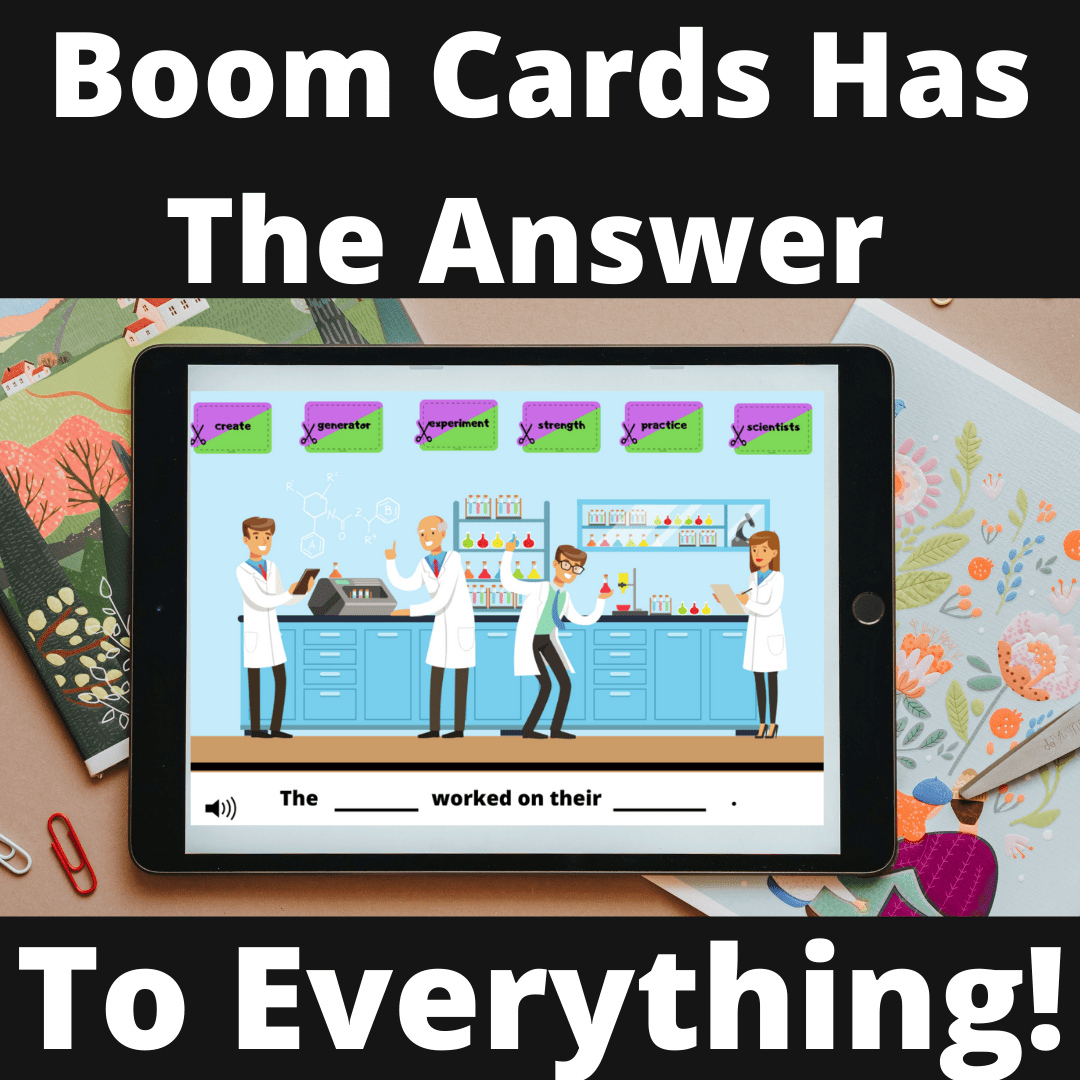
If you’re looking for ways to engage your students online, Boom Cards can help by using creative ways to help students practice their Math, English, Science skills. Boom cards can ensure that families have the tools they need to support distance/digital learning.
What are boom cards, and how to use them?
Boom Cards are self-grading exercises that are gamified for students and provide data teachers want. Its self-grading aspect can save you time. Boom cards are paperless, which is excellent for the environment.
How To Use Your Boom Cards Deck?
You will need to sign up for a FREE account to access the cards, and each student will need to either visit the website or download the Boom Learning App on their Ipad or tablet. For more information on setting up your classroom with this program, click HERE.
Resources to get you started
Here are a few PreK-5 resources that I created on Boom Learning that will support your students.
These deck games, are an ideal resource for children to practice multiplication. Children have to look at the multiplication sum (with array picture) and choose the correct answer. This makes learning time table so much fun. Your students will feel like they are playing a game and learning at the same time.
********************************************************************************
This deck is targeted for 2nd, 3rd and 4th Grade or for struggling 5th Graders.
Equal Sharing Division For Beginners Boom Learning Cards. There are thirteen slides where students can drag and drop food pieces and share them between two, three, four or five children. On these slides, student will have space to select the correct number and write the correct answer for the division equation. No prep needed!
When you couple immediate recognition of sight words with a good knowledge of basic phonics, that’s when a child’s reading can really take off.
This BOOM CARDS™ Sight Word Sentences provide a motivating way for your students to practice reading in a fun, interactive way. Sight words are often words that have little meaning on their own, but they do contribute a great deal to the meaning of a sentence. Some sight words can be sounded out using basic phonic rules, e.g. “it” is an easy word to read using phonics. Many of the sight words are not phonically regular and are therefore hard to read in the early stages. These words are sometimes called tricky words or high frequency words. In addition to being difficult to sound out, most sight words have a rather abstract meaning which is hard to explain to a child. It’s easy to learn words like “cat” and “house” because they can easily be related to a real object or a picture, but how do you represent the word “there” or “of”?
That is why it is important for students to instantly recognise sight words in order to build up their reading fluency. It is also important for them to practice words in meaningful context through phrase and sentence reading practice. This sight word sentence game is divided into ten stages based on frequency of use and difficulty of the word.
 Learn Everyday Hub